THE FUR IN ME
THE FUR IN ME (2023)
Independent Developer
A 2D precision platformer where players use colors to defeat enemies and overcome obstacles.
Project Info
Engine: Unity
Development Time: Multi-year iterative development (part-time)
Team Size: Solo Developer + 2 Freelancers (Audio, Capsule Art)
Platform: Steam
Status: All gameplay systems and levels implemented (30 levels, 300 challenges); 3-level vertical slice completed with final art and audio.
My Role
- Systems Design
- Programming
- Level Design
- Narrative System Design
- Production & Scope Planning
- Audio Direction
DESIGN GOAL
The goal of The Fur in Me was to create a 2D precision platformer where difficulty emerges from the interaction between basic movement (run, jump and smash) and a color-based input system, combining mechanical execution with fast decision-making.
The experience was designed to appeal to a broad range of player skill levels through difficulty modes that modify core rules, allowing both accessible and highly demanding versions of the same systems.
A key objective was to reduce player frustration by prioritizing fast iteration, using instant respawns and uninterrupted challenge flow to support repeated attempts and mastery.
MOVEMENT SYSTEM
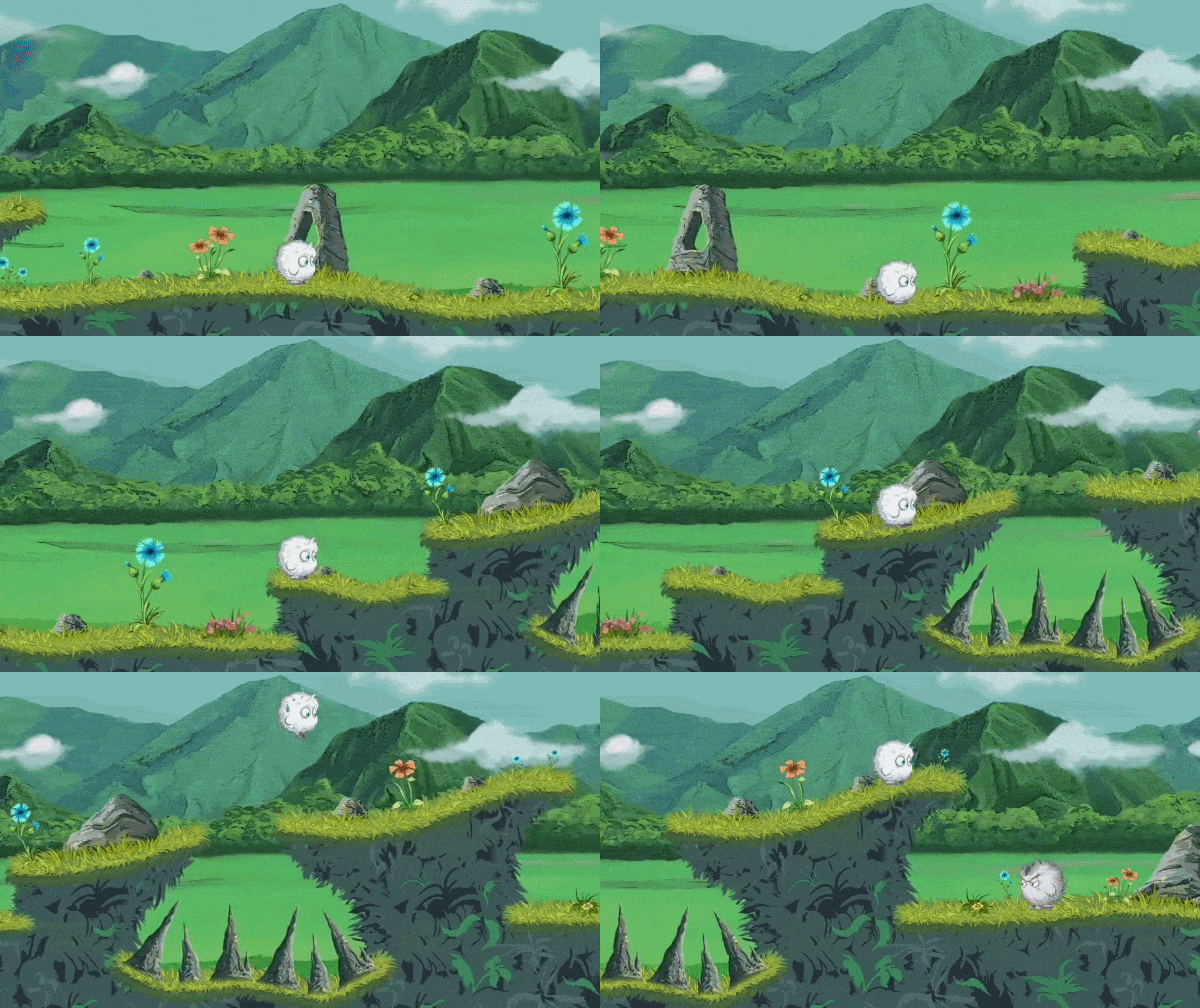
The project began as a traditional 2D platformer focused on building a solid movement foundation (run, jump and air control).
Movement was designed around established platforming conventions, with particular attention given to jump height, airtime and responsiveness to ensure precise and predictable control.
Establishing a reliable and well-tuned movement system was essential, as it forms the basis for all challenges and directly impacts the player’s ability to engage with the game’s mechanics.
CAMERA DESIGN
After establishing the core movement, I explored how different camera behaviors could influence gameplay, prototyping variations such as fixed, axis-locked and player-following cameras.
Each configuration was used to support different types of challenges by controlling player visibility and spatial awareness:
- Fully Static Camera (X & Y locked)
Used for confined spaces and multi-directional challenges, allowing precise control over what the player sees. - Horizontal Movement (X follows, Y locked)
Supports standard left-to-right traversal while maintaining vertical stability. - Vertical Movement (Y follows, X locked)
Enables controlled up/down navigation and vertical challenges. - Full Follow (X & Y follow)
Used for more dynamic movement across multiple directions.
To improve readability and reduce frustration, the player character was intentionally offset within the camera frame based on movement direction. This provides greater visibility in the direction of travel, giving players more time to react to upcoming hazards.
In addition to player-following cameras, some challenges use cameras that move independently along one axis. These scenarios create time pressure, forcing players to act quickly as the camera movement introduces implicit urgency and limits decision time.
COLOR MECHANIC
The initial concept was based on elemental relationships (e.g. fire, water, leaf, earth), where players would defeat enemies by jumping on them and selecting the correct counter-element. While functionally sound, this approach required players to memorize relationships, increasing cognitive load and reducing readability during fast-paced gameplay.
Playtesting confirmed this issue, as players struggled to quickly recall the correct element despite understanding the logic.
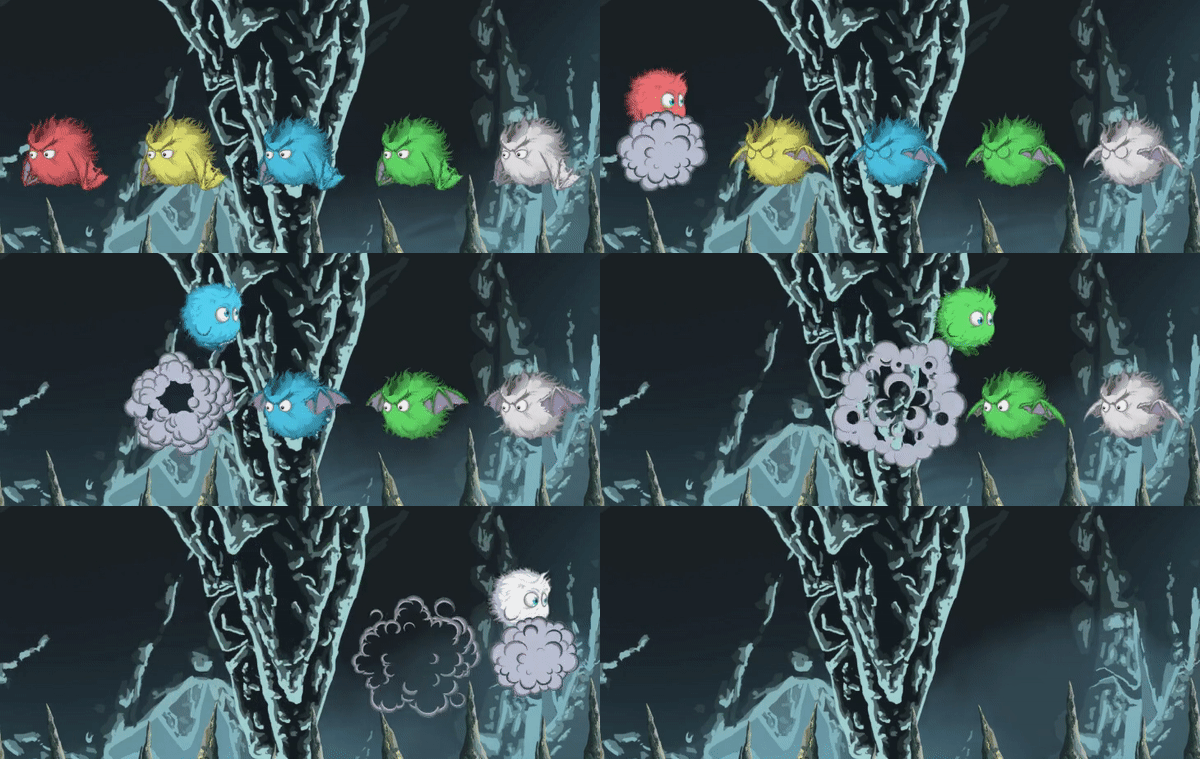
To improve clarity and responsiveness, the system was redesigned around direct color matching, where players must use the same color as enemies and objects. This made interactions immediately understandable and reduced the need for memorization, allowing players to focus on execution.
This change also enabled greater scalability. Increasing the number of active colors naturally increases difficulty, while maintaining a consistent rule set. It further allowed for flexible rule variation across game modes, including modes with fewer colors or dynamically changing rules, which would not have been coherent within an element-based system.
BASE ENEMY VARIATION
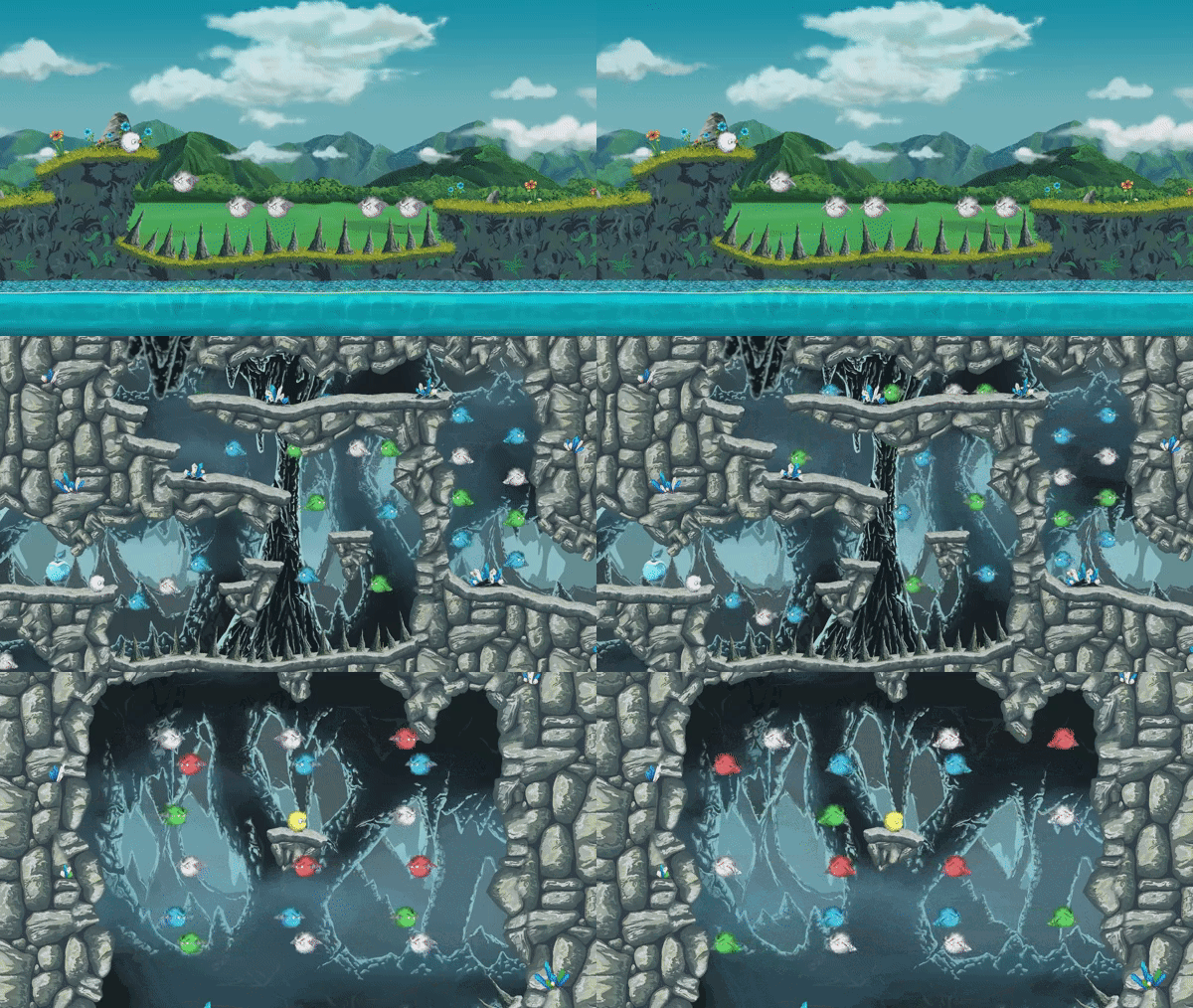
Initial prototypes focused on a single, simple enemy: a stationary target used to validate the core interaction between movement and color matching.
From this base, variations were created by modifying behavior rather than introducing new systems. These included enemies that move in looping patterns across different directions, as well as continuously spawned enemies that travel along a fixed path.
These variations allowed the same core interaction to generate different types of challenges, such as timing-based encounters and sustained pressure scenarios.
ENVIRONMENTAL CHALLENGE DESIGN
The color-matching system was extended beyond enemies to drive a wide range of environmental and combat challenges, all built around consistent interaction rules.
Challenges were designed as modular variations that test different aspects of the core mechanic:
- Traversal with Color Constraints
Elements such as directional bubbles, portals and translucent walls require correct color matching to move safely through space, combining positioning with input selection. - Combat & Reactive Threats
Enemies and hazards (e.g. projectiles, multi-hit enemies with changing colors) introduce timing pressure and force players to adapt quickly to changing states. - State-Based Environments
Systems like color-reactive terrain and toggleable platforms change behavior depending on the player’s current color, turning movement into a dynamic decision-making process. - Neutral Hazards
Non-color-based elements (such as spikes or moving terrain) ensure baseline platforming challenge and prevent over-reliance on a single system.
All challenges follow a shared rule set, allowing the same core mechanic to generate a wide variety of gameplay situations without introducing new abilities.
LEVEL DESIGN & PROGRESSION
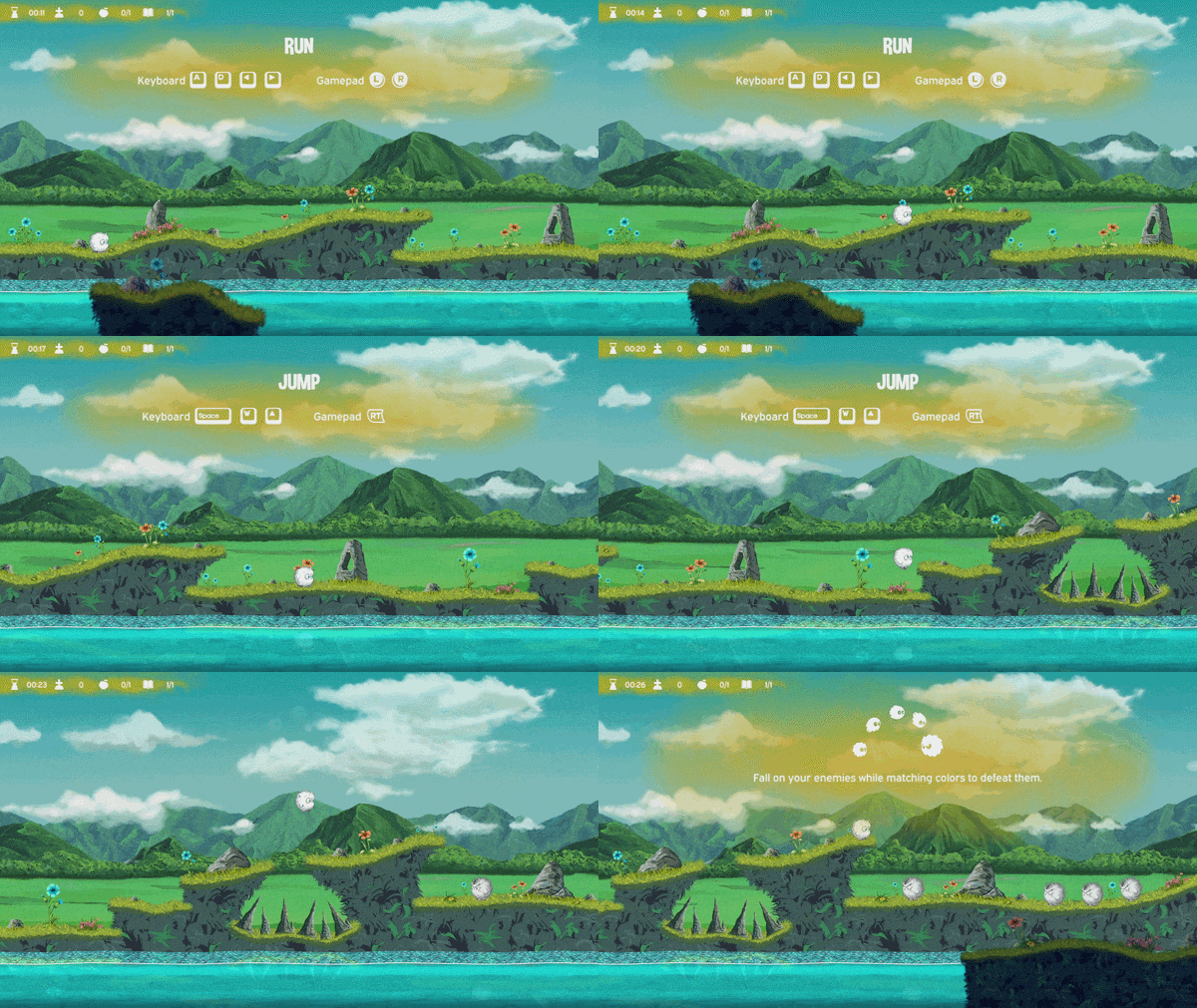
Levels were structured to introduce mechanics in safe, controlled scenarios where players could experiment without pressure.
Once introduced, the mechanic was expanded by combining it with increasing levels of pressure:
This structure allowed difficulty to increase through controlled combinations while maintaining readability and player understanding.
DIFFICULTY MODES
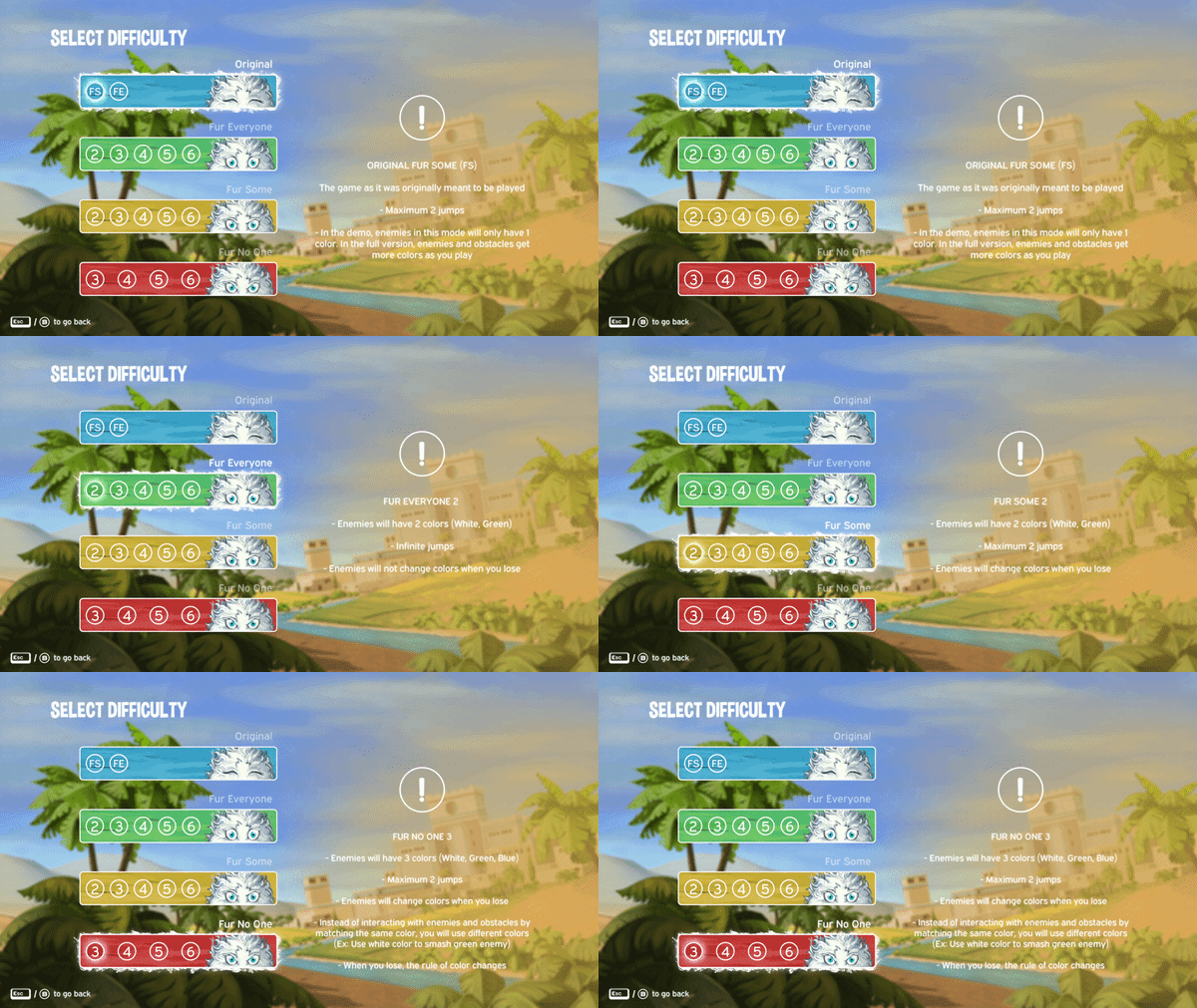
The game’s difficulty system was designed around controlling the number of active colors and modifying core interaction rules, allowing the same mechanics to support a wide range of player experiences.
In all modes, enemies only use colors available to the player, ensuring that every challenge is solvable and readable.
Game modes
- Original Mode
Players start with a single color and progressively unlock additional colors, increasing complexity and cognitive load over time. - Fur Everyone (2 – 6 colors)
Players start with a fixed number of colors that remain constant throughout the game. Infinite jumping is enabled, allowing players to bypass difficult challenges and focus on exploration or narrative. - Fur Some (2 – 6 colors)
Similar to Easy, but with standard movement constraints (e.g. limited jumps), requiring players to fully engage with each challenge. - Fur No One (3 – 6 colors)
Introduce rule variation by changing how colors interact. Instead of matching identical colors, players must learn new relationships, which dynamically change after each failure, requiring constant adaptation.
Dynamic Challenge Variation
Enemy colors were manually assigned to ensure that each challenge remains balanced and avoids trivial or repetitive scenarios.
After each failure, enemy colors are reassigned, requiring players to approach the same challenge under different conditions.
In 2, color-modes, enemy groups swap colors (e.g. all green enemies become white and all white enemies become green).
In modes with more colors, colors are reassigned in varied combinations to prevent patterns from repeating.
This approach discourages memorization and encourages players to adapt on each attempt.
NARRATIVE DESIGN
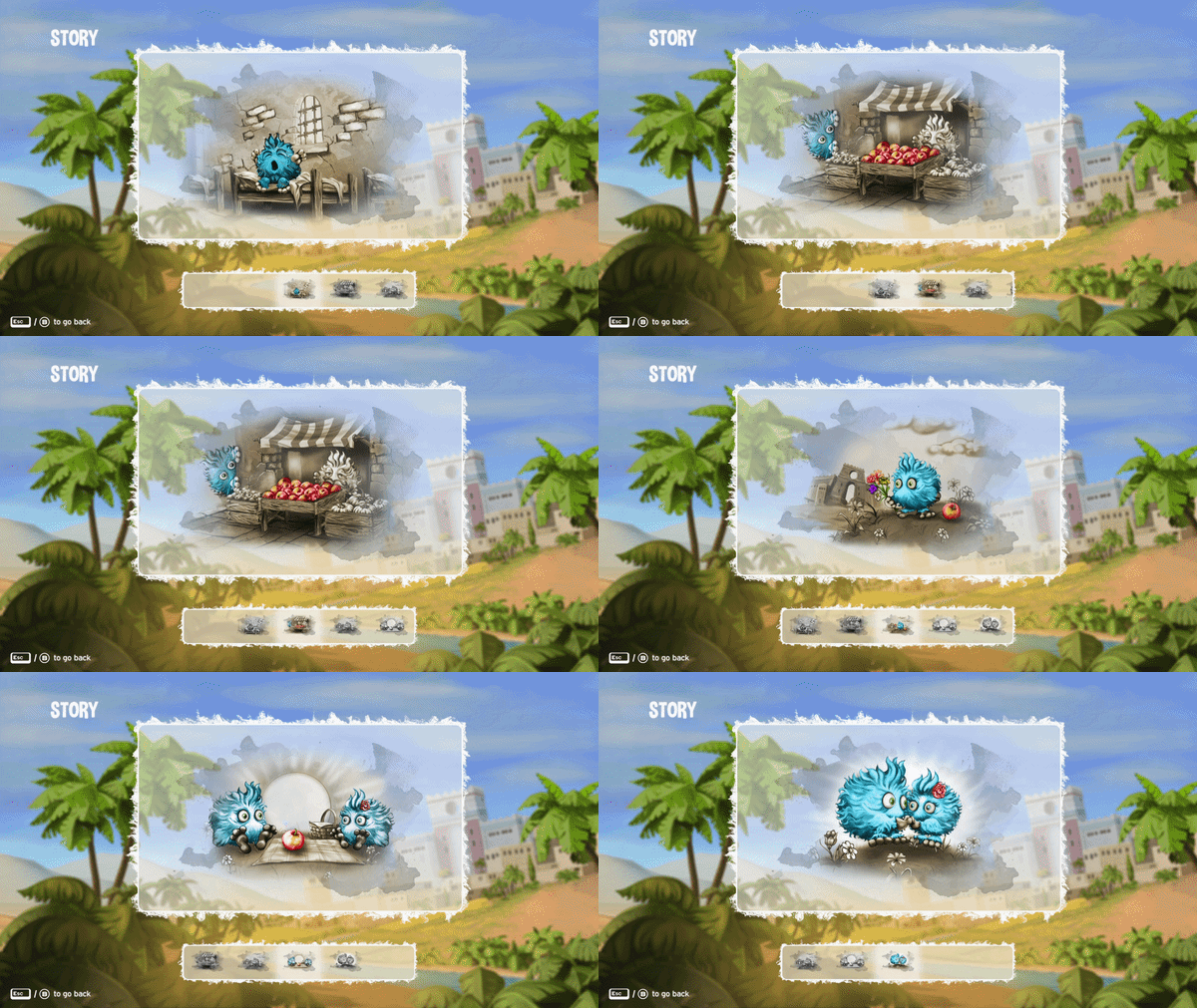
The narrative was designed as a large-scale story delivered through visual sequences, with the goal of supporting the gameplay without interrupting it.
Story moments were presented between challenges as optional images, allowing players to engage with the narrative at their own pace or ignore it entirely without affecting progression.
This approach aimed to preserve gameplay flow while still providing a broader context and mystery for players interested in the story.
RESULTS
- Designed and implemented a complete game framework with 30 levels and approximately 300 challenges, all fully playable.
- Implemented all core gameplay and support systems, including movement, camera, color mechanics, difficulty modes, scoring and player options.
- Produced a 3-level polished vertical slice with final art and audio.
- Created 7 narrative images integrated into gameplay progression.
- Set up a Steam page in preparation for release.
The project demonstrates how a single, well-defined core mechanic can scale into a wide range of challenges and game modes through system design, controlled complexity and iterative development.
LESSONS LEARNED
The development of The Fur in Me provided valuable insights into system design, production constraints and player experience.
- Scope must be aligned with production capacity
The project scope was too large (environments and narrative content), making full production unfeasible with available resources. - Prioritize prototyping before full production
Early challenges required multiple redesigns as my understanding improved, highlighting the need for more iteration before scaling content. - Test early and with external players
Playtesting revealed that the game was initially too difficult. External feedback was essential for improving balance. - Plan for continuity in external collaboration
Progress depended on a single external artist, and when that collaboration ended, replacing it proved difficult due to style consistency and production effort. This created a blocker that prevented further development and delayed potential funding opportunities.