A TOWER'S WILL
A Tower’s Will (2025)
A physics-based climbing platformer where players control a constantly bouncing sphere climbing a 1000-meter self conscious tower.
The project explores how simple physics-based controls combined with structured environmental challenges can create a deep mastery-driven gameplay experience.
Project Info
Engine: Unreal Engine 5
Development Time: 12 months
Team Size: Solo Developer + 2 Freelancers (Audio, Capsule Art)
Platform: Steam
Status: Project released
My Role
- Systems Design
- Programming
- Level Design
- Narrative System Design
- Production & Scope Planning
- Audio Direction
DESIGN GOAL
The goal of A Tower’s Will was to create a rage platformer where difficulty comes from environmental challenges and physics mastery rather than complex player inputs.
The controls were designed to be easy to learn but difficult to master, allowing depth to emerge from player skill, momentum control and spatial awareness.
Instead of introducing new abilities, progression comes from increasingly demanding platforming challenges.
MOVEMENT SYSTEM AND ITERATION
Core Movement
The project began as a simple physics-based roll-a-ball prototype.
During control testing, I discovered that holding the jump input caused the ball to automatically bounce every time it touched the ground. This created a rhytmic movement pattern that felt significantly more engaging than manually pressing jump.
After playtesting with several players, the final control system became:
- the ball automatically jumps on landing
- player controls direction with WASD / left stick
- player controls camera with mouse / right stick
- camera orientation influences trajectory
This simplified the input space while allowing gameplay depth through physics movement and landing precision.
Movement Tuning
Because traversal relies entirely on physics, extensive iteration was required to ensure the system felt predictable and responsive.
Movement parameters tuned during development included: bounce force, acceleration, friction and maximum speed.
Speed Tuning and Skill Expression
Once the level design was stable, I slightly increased the ball’s maximum speed.
This allowed skilled players to:
- skip intermediate platforms
- recover faster when returning to earlier sections
- discover faster routes for speedrunning
This adjustment allowed the same level design to support both first-time progression and advanced mastery.
LEVEL DESIGN & DIFFICULTY PROGRESSION
Challenge Design Methodology
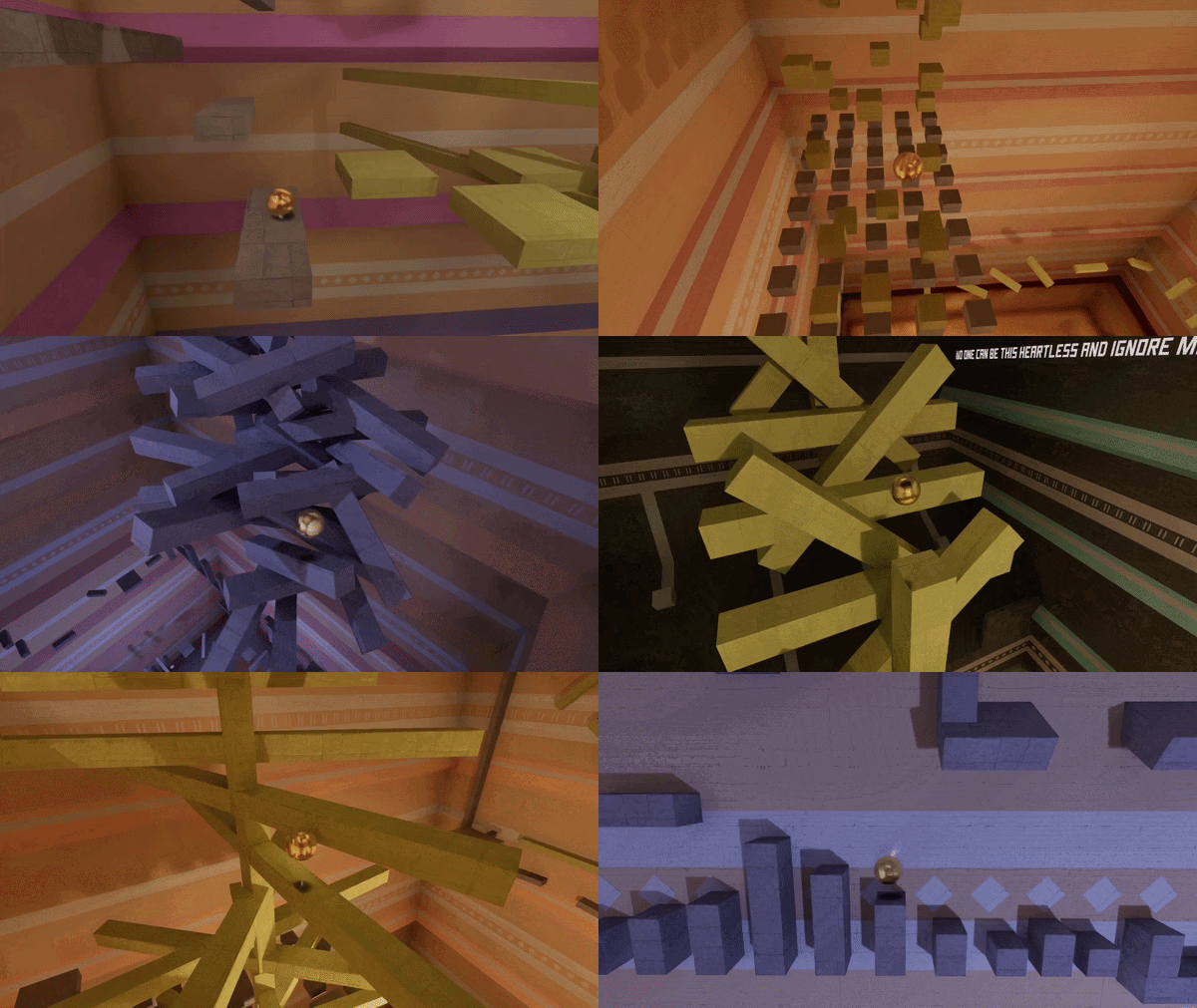
To rapidly prototype traversal challenges, I experimented with several geometric primitives including cubes, pyramids, cylinders and spheres.
Through iteration, I discovered that cube-based obstacles alone provided a large design space when combined with:
- scale variation
- rotation
- moving platforms
- structural combinations
Using this approach I was able to build a 1000-meter tower entirely with cube-based obstacles while avoiding repetitive challenges.
Difficulty Progression
The tower is structured to gradually increase challenge complexity while keeping the player’s movement abilities constant.
Instead of introducing new mechanics, difficulty evolves through environmental behavior and timing demands.
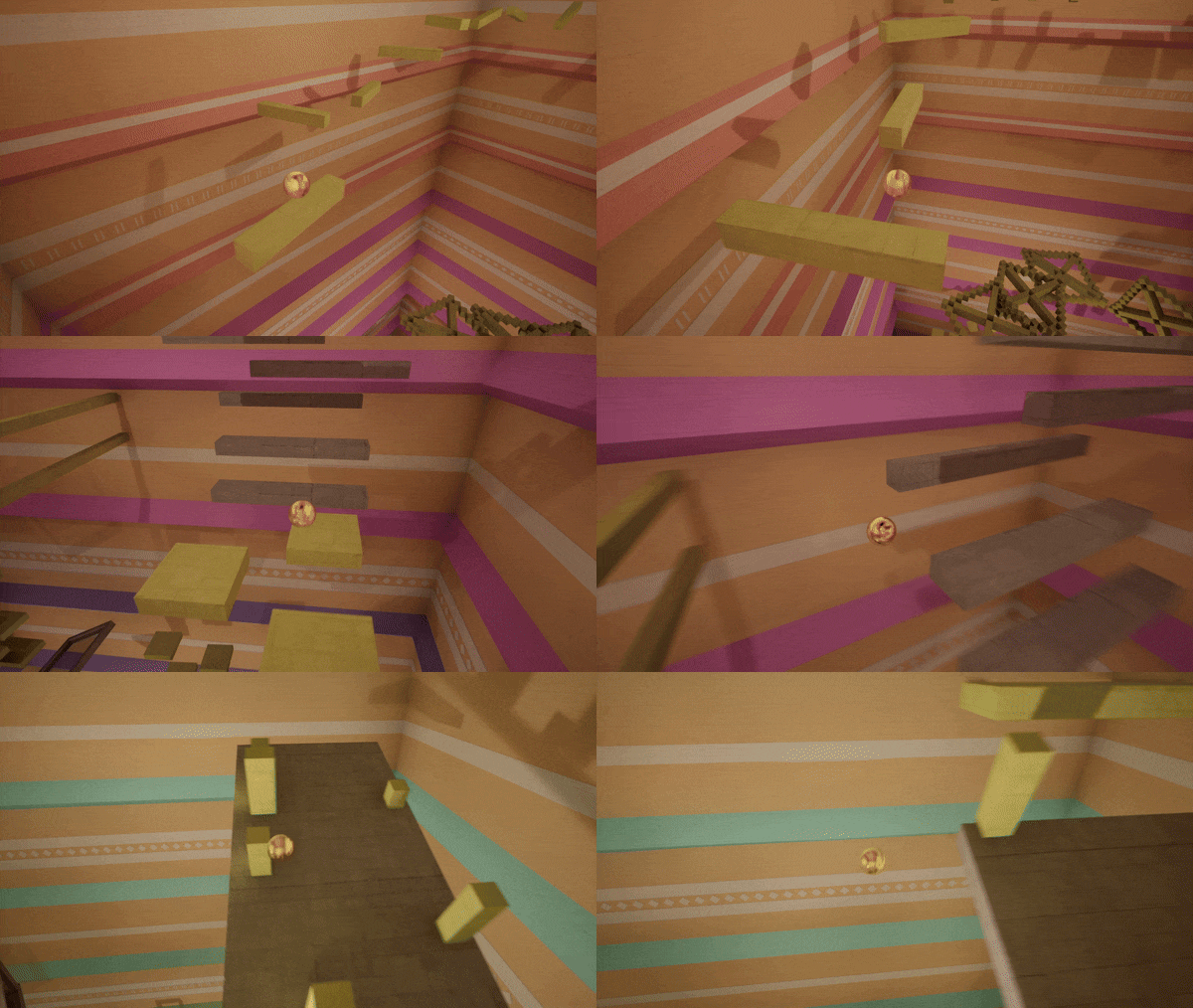
Platform types are introduced in the following order:
- static
- moving
- static + moving
- rotating
- static + rotating
- static + rotating + moving
This progression allows players to first understand each obstacle behavior individually before facing more complex combinations.
Failure Management
Failing is a core part of the game’s tension, but excessive punishment can quickly lead to frustration.
To balance this, I structured the tower so that players rarely lose more than about 50 meters of progress before encountering a recovery platform.
This maintains the emotional impact of falling while ensuring players can quickly re-engage with the climb.
As the tower height increases, recovery platforms become harder to land on due to moving and rotating obstacles, preserving challenge without increasing the distance lost.
NARRATIVE SYSTEM
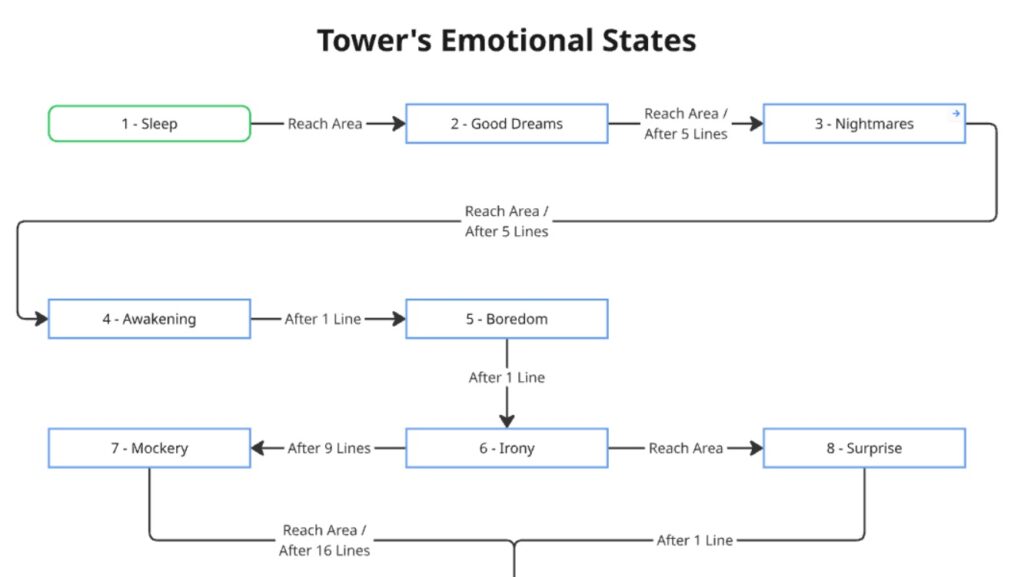
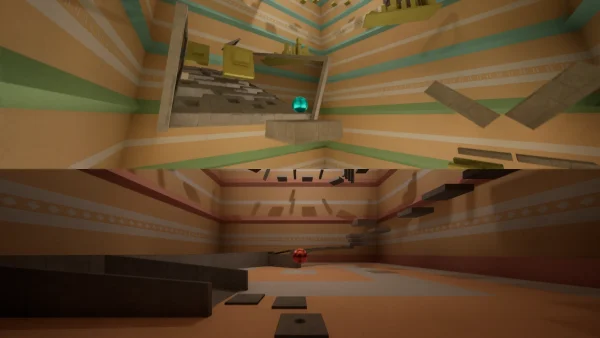
To reinforce the tower as both environment and antagonist, I designed a narrative system where the tower reacts emotionally to the player’s persistence.
The system uses a state machine with 19 emotional states ranging from indifference to frustration and eventual psychological collapse.
State transitions depend on:
- player progress
- time spent climbing
- triggered dialogue lines
More than 1000 dialogue lines were written to support the system and maintain narrative coherence across different play paths.
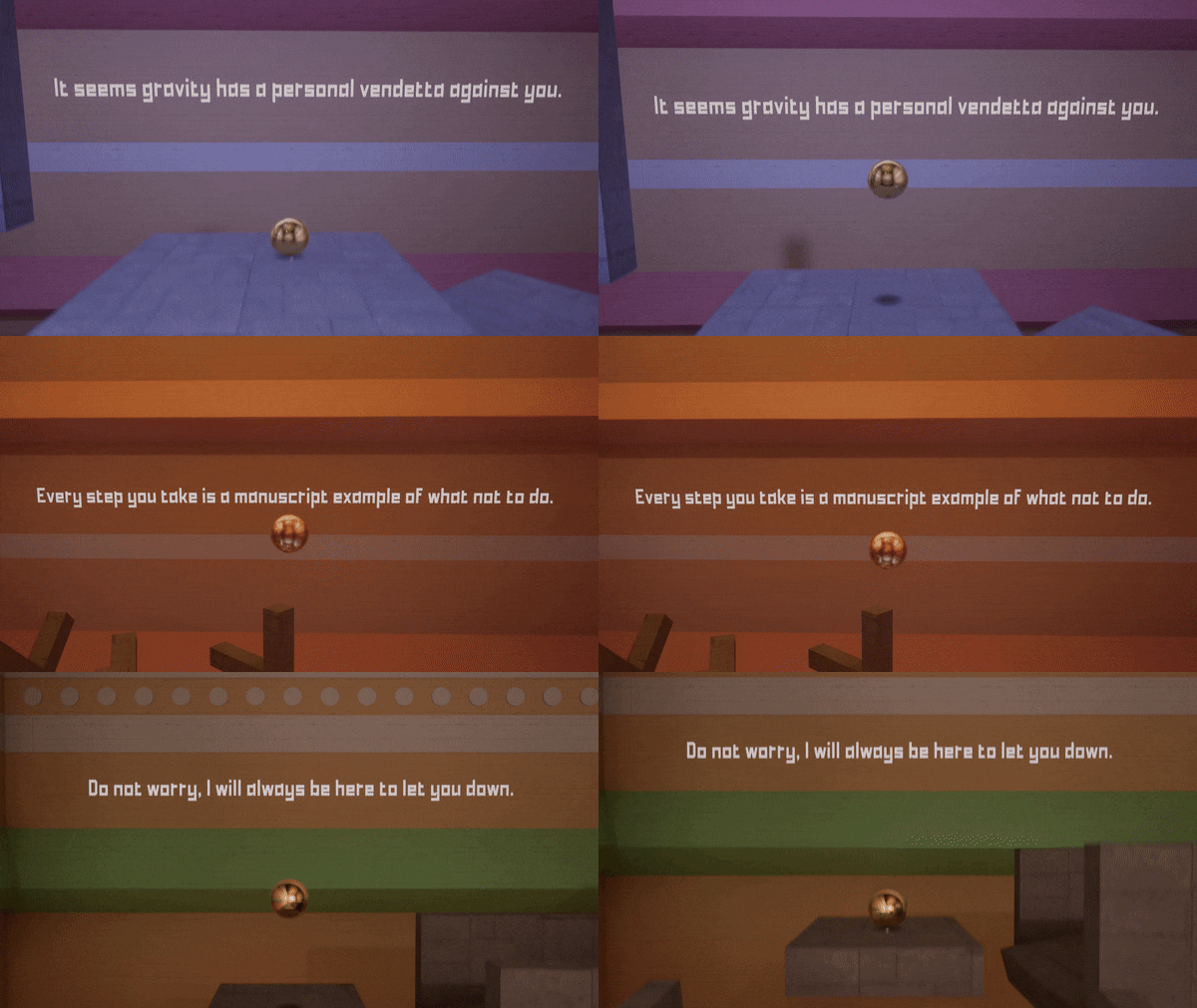
Dialogue appears dynamically on the tower walls as players climb.
MULTIPLAYER
After launch I added a local two-player mode that supports Steam Remote Play.
Key adjustments included:
- player collision enabling sabotage
- narrative dialogue disabled for story consistency
- change the way the dynamic ceiling and floor work
This allowed the core traversal system to support competitive play.
RESULTS
The project was released as a full commercial title on Steam after 12 months of development (on schedule).
Key outcomes include:
- a complete 1000-meter climbable tower with structured difficulty progression
- a physics-based traversal system tuned through extensive playtesting
- over 1000 narrative dialogue lines integrated into a dynamic state system
- full Steam platform integration including achievements, cloud saves, Remote Play and global leaderboards
- support for 33 languages and a full options system to expand player accessibility
- post-launch update introduced local-multiplayer using Steam Remote Play
- a playable demo released on Steam to showcase the core mechanics and attract new players
The project demonstrated how a simple and emergent core mechanic combined with structured progression can support a full commercial gameplay experience.
LESSONS LEARNED
Developing and releasing A Tower’s Will provided several insights about design, production and player behavior.
- Align design effort with player priorities
During development I invested significant effort into the tower’s narrative system and dialogue. After release, I observed that many players focused almost entirely on mastering the climbing mechanics and often ignored environmental dialogue while concentrating on not falling. This highlighted the importance of prioritizing gameplay feel, visual readability and mechanical clarity in precision platformers, as these elements tend to dominate the player experience in high-concentration gameplay. - Strong visual presentation and marketing are critical
Releasing the game on Steam highlighted the importance of strong visual presentation and early marketing efforts. A more polished trailer, stronger visual hooks and earlier promotion could have helped build a larger wishlist base before launch. This experience reinforced the importance of treating marketing and visibility as an integral part of development, rather than something addressed only near release. - Maintain scope and production discipline
Completing the project within a self-imposed 12-month timeline required careful scope management and prioritization. This experience reinforced the value of focusing on a strong core mechanic and building the rest of the game around it. - Expand technical expertise through full production
This was my first full project developed in Unreal Engine 5. Building the game provided extensive hands-on experience with UE5 systems, Blueprint scripting, physics tuning, and production pipelines